Researchers Calculate Global Scale of Underground Fungal Networks
Scientists have determined the overall length and weight of arbuscular mycorrhizal fungal networks across the planet.
Concealed beneath the Earth's surface worldwide are 110 quadrillion kilometers of arbuscular mycorrhizal fungal networks—intricate systems of ultra-fine threads that, if linked end to end, would extend nearly a billion times the distance between Earth and the sun, according to research published Thursday in *Science*.
These fungal communities forge close associations with plant roots, supplying them with essential nutrients such as phosphorus and nitrogen in return for carbon. Prior studies have found that these networks sequester 1 billion tons of carbon underground annually. If the fungal network were not storing that carbon, it would otherwise contribute to atmospheric warming.
However, these networks had never been charted on a global scale until now. The new study, spearheaded by the Society for the Protection of Underground Networks (SPUN)—an organization established to map mycorrhizal fungal networks—employed a blend of literature reviews, soil samples collected worldwide, machine learning, and laboratory tests to estimate the distribution and mass of these systems and pinpoint their densest regions.
"This is the moment we transitioned from knowing this system exists to truly understanding where it is, how dense it is, and where it has been," stated Toby Kiers, executive director and co-founder of SPUN and a co-author of the study.
For decades, researchers have recognized that arbuscular mycorrhizal fungi form close symbiotic relationships with approximately 80 percent of global plant species and are present nearly everywhere plants grow. Yet, the full scope of these networks and their densest locations—such as grasslands—as well as areas where they are diminishing—like agricultural zones—remained poorly understood until now.
"[The study] helps us grasp how crucial these underground organisms can be to everything we observe above ground," said James Bever, a professor of ecology and evolutionary biology at the University of Kansas, who investigates interactions between plants and soil microbes like fungi but was not involved in the new research.
Justin Stewart, an evolutionary ecologist at SPUN and lead author of the study, noted that earlier research by the team on fungal biodiversity was akin to asking someone to describe the forest near their home.
"They might say, 'Well, there are three tree species there.' That's useful. It tells me about biodiversity," he explained. "But you don't actually know the forest's size, how far apart the trees are. You lack information on its structure."
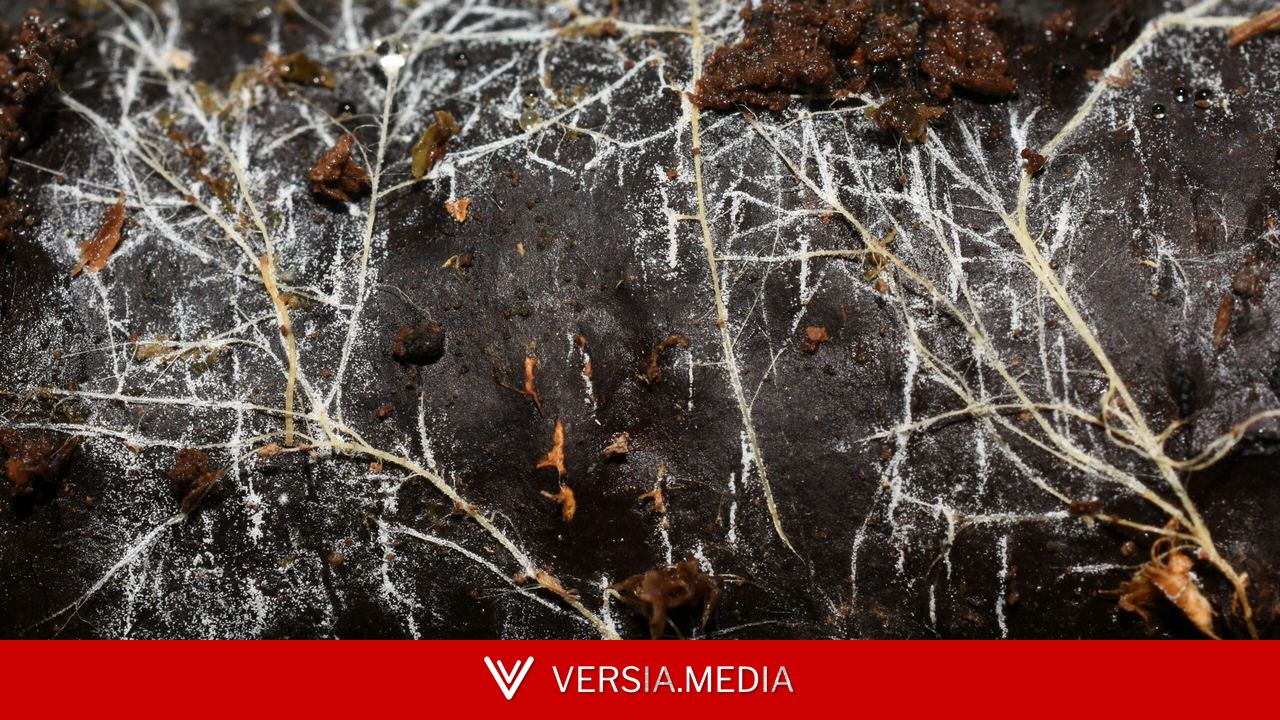
Mycorrhizal fungal networks consist of hyphae, each finer than a human hair. These living conduits transport nutrients and carbon between plants and fungi.
Because they are so long and thin, Stewart said, they can penetrate deeper into soils than roots, accessing nutrients deep underground that plants cannot reach, while also storing carbon in conditions where it can remain for extended periods.
"It's a win-win situation," Stewart remarked. "Plants thrive better, and carbon is pulled down. That relies on having dense fungal networks and soils that are active and alive."
Quantifying these fungal networks began with a review of existing studies on mycorrhizal fungi. Those studies included 16,000 core samples taken from ecosystems worldwide to measure the length of fungal threads within a given soil volume. Each sample was geolocated, allowing the team to use machine learning to generate predictive maps of global fungal networks and identify where the model performs well and where uncertainties indicate a need for more data.
Collaborating with AMOLF, a research institute in Amsterdam, they developed a technique using a robot equipped with a camera that recorded fungal networks growing over time in a lab, enabling better estimates of their widths. From there, the team calculated the network's mass, which totals roughly five times the weight of all humans on Earth.
Stewart noted that the study only covers living arbuscular mycorrhizal fungal networks and excludes dead fungal networks, which also contribute to carbon storage and add to the total biomass and influence of these networks on ecosystems. Research into dead fungal networks is still ongoing.
The study also identified where these networks face the greatest threats. Fungal network densities in croplands are about half of those in wild ecosystems. Meanwhile, wild grassland ecosystems contain approximately 40 percent of the world's arbuscular mycorrhizal biomass. Yet, these grasslands are among Earth's least protected ecosystems and are converted into farmland at four times the rate of forests, posing a potential risk to these networks and the benefits they provide to plant life and carbon storage.
Previous research from SPUN has found that 90 percent of fungal communities globally are unprotected, and many ecosystems, such as the deserts of the American Southwest, remain understudied.
The researchers said the next steps involve exploring what exactly drives mycorrhizal fungi losses and the consequences of that decline. This is why the SPUN team will attend this year's United Nations Climate Change Conference—COP31—to present to policymakers on the importance of these networks and their potential role in protecting ecosystems and sequestering carbon.
A deeper understanding of mycorrhizal fungi at the ground level is essential, said Corentin Bisot, an AMOLF biophysicist and co-author of the study.
"We're still far from fully understanding how, if you have a grassland next door and want to increase microbes and fungi there," Bisot said. "We don't have the toolkit for you to do it."
Stewart described this study as just the first map. Like the early maps the Spaniards drew of California—which depicted the state as an island, he said—there will be new discoveries about the density of fungal networks worldwide that will expand public understanding of them.
This article originally appeared on Inside Climate News, a nonprofit, non-partisan news organization covering climate, energy, and the environment. Sign up for their newsletter here.